K
Return Home

PPDP: Reimagining the Smart TV Remote

A UX case study focused on bridging the emotional connection of traditional hardware with modern digital precision.

Smart TV Remote UX Design

The Challenge

Smart TV navigation is notoriously slow and unintuitive. My goal was to redesign the interaction model to reduce search friction and simplify app discovery without alienating traditional users.

Search Friction

Typing and searching for movies is a chore on traditional D-pads, leading to user fatigue.

App Discovery

Navigating through dozens of streaming apps is difficult with limited feedback systems.

Tactile Loss

Users feel disconnected when touch-only interfaces require them to look away from the TV screen.

Emotional Bond

People have deep muscle memory with physical remotes that modern "smart" remotes often ignore.

Research & Insights

The Muscle Memory Bond

My primary research revealed that users have a deep "Muscle Memory" with physical remotes. Despite voice assistants, people still prefer the tactile certainty and reliability of physical buttons.

  • Habitual Resistance: Users view the TV experience as a time to "disconnect"—they don't want remotes that feel like complex smartphones.
  • Visual Focus: A great remote allow users to stay focused on the TV screen, not the device in their hand.

The Solution: The Hybrid Model

Tactile Hardware + Digital Precision

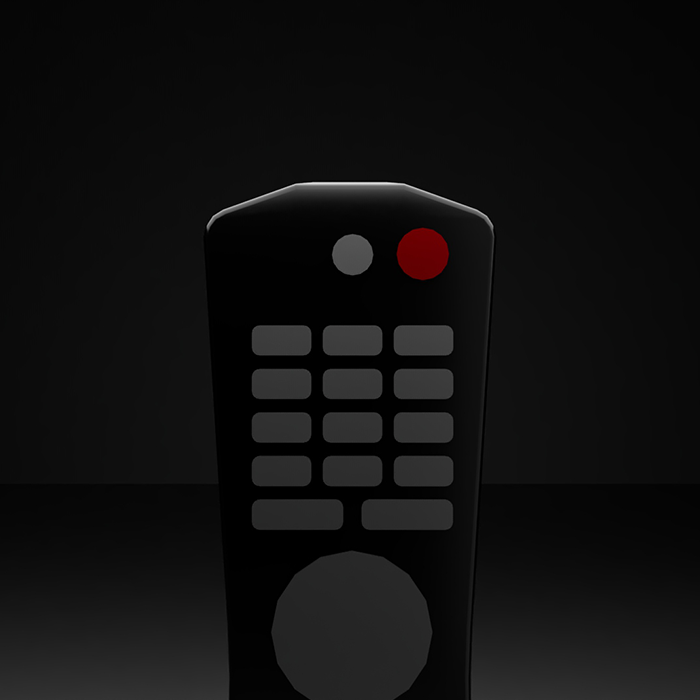
The final design incorporates a traditional alphanumeric keypad for familiar, eyes-free navigation.

I paired this with a precision pointer function that allows for fluid, grid-based browsing within the home menu—solving the slow text entry problem while honoring established habits.

Iterative Evolution

V1: Digital-First Concept

Initial concepts focused on a screen-heavy digital remote. testing showed users missed the emotional connection and tactile feedback of hardware—they felt it was "just another screen to manage."

The Hybrid Fix

Iteration 2 shifted focus back to physical buttons while adding a hidden gyro-sensor for the pointer function. This provided the "Smart" capability without sacrificing the "Remote" feel.